Emergency Fund Calculator
How Much Money Should You Have in Your Emergency Fund?
Ad Disclosure: This article contains references to products from our partners. We may receive compensation if you apply or shop through links in our content. This compensation may impact how and where products appear on this site. You help support CreditDonkey by using our links.
How much money should you save for an emergency? Use this calculator to find out if you're saving enough.
 |
When life throws you a curveball, an emergency fund can pay your financial obligations while you recover.
Some people recommend saving anywhere between 3 and 12 months' worth of expenses. But that doesn't give you the full picture.
This calculator shows you:
- How much your emergency fund should be, based on your expenses and risk factors
- How much you should save each month
- How long it will take to save up your fund
Find out what goes into your fund and how to account for your risk factors in the walk-through below.
- First, total your must-pay expenses for 6 months (this includes essentials like rent, utilities, insurance, groceries, and childcare).
- Then, assess your personal risk factors. If you're married with kids, add 30%. If you're job insecure, add another 20%. If anyone has a chronic health condition, add another 30%.
- Finally, subtract your existing savings from the number you've calculated.
Factor #1: Expenses
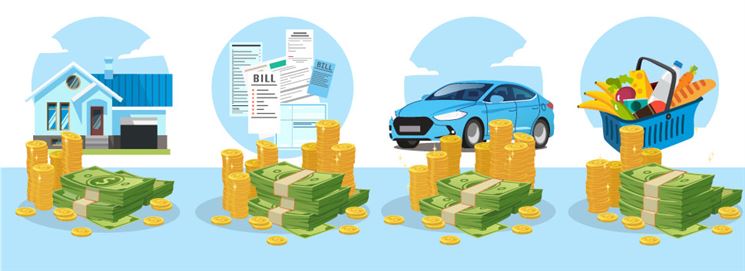 |
Your monthly expenses have the biggest influence on how much your emergency fund should be.
What things need to get paid every month in order for your family to live comfortably each month? Here's what you'll need to figure out:
- Rent/mortgage
- Utilities (electricity, water, gas, garbage, etc.)
- Telecommunications (phone, internet, etc.)
- Insurance (health, car, house/renters', etc.)
- Transportation (gas, car payment, public transportation, etc.)
- Debt (credit card, student loans, etc.)
- Groceries & food
- Childcare (if it applies)
An emergency fund based only on your monthly expenses might still come up short.
Here's how to identify any potential risks that would benefit from a larger emergency fund.
Factor #2: Risk
 |
There are a few lifestyle factors that require a bigger emergency fund.
Here's what we ask about (and why it matters):
- Job security + difficulty of finding a new job
Imagine if you were to lose your job. Do you expect to find a new one quickly?Consider how in-demand your profession is.
If you usually have an unstable monthly income, it may take longer to get back on your feet. Professions with variable monthly income include commission-based or seasonal jobs.
- Marital status
The bigger the family, the larger the emergency fund you'll probably need.Two-income homes can reach their savings goals a bit faster.
You'll want to make sure you have enough to support the needs of any children, as well. Basic expenses include childcare, clothing and school supplies.
- Health status
Out-of-pocket medical expenses can add up quickly.Do you often pay for medication or treatments that your insurance doesn't cover? If so, your emergency fund should factor in those additional expenses.
Remember: Your health is a priority. You shouldn't have to choose between your health and your financial well-being.
Factor #3: Savings
 |
Savings that you already have stashed away can be added to your emergency fund.
If you do choose to add it in, the calculator will subtract that amount from your emergency fund total.
Looking to give your emergency fund a place to live? Online savings accounts offer rates up to 10x the national average offered by traditional banks.
It's never too late (or too early) to start saving up money. Here are our top ways to get into the habit of saving at a pace that's best for you.
- Open a high-yield savings account
- Use a money saving app (best for new savers)
- Look into investing
- Boost your saving with a robo-advisor
- Take advantage of a savings account promotion
Fun fact: 21% of adults reported that winning the lottery was the most practical way to accumulate a large chunk of money for their own retirement. A nice idea, but probably not your best strategy.
Instead, create a plan to reach your emergency fund goal with regular contributions.
The Next Step: Setting Up Contributions
 |
The below calculator will help you create a savings timeline to save up your fund.
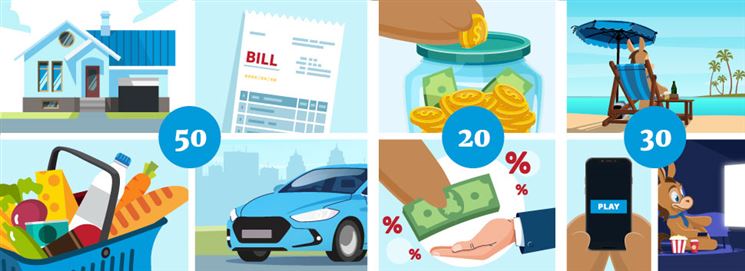
This calculator is based on the 50-20-30 Budgeting Rule. Here's how it works:
Spend 50% of your net income on needs and obligations, including...
- Rent or mortgage
- Utilities
- Insurance and healthcare
- Groceries
- Transportation, and more
Spend 20% on your monthly savings and debt repayment, including...
- Retirement accounts (401(k), IRAs)
- Above-minimum payments on loans and debt
- Emergency fund contributions
The final 30% is used for wants, or non-essential expenses, including...
- Eating out at restaurants, or buying more expensive food
- Tech accessories
- Entertainment events
- Streaming services
Your income, monthly expenses, and existing savings will tell you how much you should put away every month.
Some individuals will have supplemental income, such as Social Security or Disability Insurance. Be sure to include this additional money in the calculator.
- Social Security: "Entitlement" program that provides benefits based on your past earnings/work history. Available for retirees, disabled people, etc.
- Supplemental Security Income (SSI): "Needs-based" program for people who are usually older, disabled, or low-income. No work history requirements.
- Social Security Disability Insurance (SSDI): "Entitlement" program that provides benefits based on work history to a disabled person or their family members.
The Why, Where, and How of Emergency Funds
You have your emergency fund number, so what now? If you still have questions, the sections below will help break down why you need a fund, how to save up quickly, and where to keep it stashed.
Why Do I Need an Emergency Fund?
You already know that an emergency fund can be a life-saver. But it helps to know all the things an emergency fund is good for. Here's why you'll want to get your fund saved up ASAP:
- Lower your debt burden
Without savings, every unexpected expense will require you to take on debt, whether it's borrowing from family, using a credit card, or taking out a personal loan.Emergency funds don't have to be paid back with interest. Plus, you can replenish the fund in your own time.
- Protection from job loss
Emergency savings enable you to cover several months of expenses while job hunting. Plus, it gives you the time to weigh your options, instead of taking the first available opportunity because you need the money. - Guard against the loss of your business
Similarly, if you own a business, you know how razor-thin margins can be. Your emergency fund can protect you from devastation if your business is forced to shut down. - Cover home or auto expenses
In 2018, the average American spent nearly $5,000 on home repairs alone.If you own a home or car, you know unexpected damage, replacing parts, and maintenance can be expensive. An emergency fund can help protect your home and vehicle.
- Meet an unexpected tax burden
Tax season can bring along some unpleasant surprises. In fact, money owed to the government is usually due in one lump sum. An emergency fund can help keep Uncle Sam from knocking.
How to Save Up Your Fund Quickly
Slow, steady saving is obviously the easiest. But when you're feeling the pressure, here are a few ideas to help you save up fast:
- Get help from a savings app. Sometimes it's easiest to set it and forget it. Automatic savings apps let you set up a deposit schedule in just minutes.
- …Or a cash back app. Cash back apps help you reap additional rewards from your regular purchases. When you've earned enough, transfer it into your fund account.
- Unload your unwanted items. Have some clothes you want to donate? Do yourself a favor and sell them online, instead. Without much work, you'll be able to cash those earnings and get a step closer to your fund goal.
- Cut costs on gas, utilities, and more. It's easier than you might think! Our article on saving money includes 100+ ideas for cutting down on expenses - some requiring little-to-no work at all.
Where to Keep Your Emergency Fund
You have several options for storing your emergency fund, but each has its own strengths and weaknesses.
Criteria To Look For
Ideally, your emergency fund should be kept in an account that:
- Is easily accessible (but not too easy, like a checking account)
- Is safe and free (or nearly free) from risk
- Accrues some interest
The whole point of having an emergency fund is using it whenever an emergency happens. Since you won't know when this will occur, then you'll need to be able to pull your money out at a moment's notice.
But you don't want your emergency fund to be so easy to withdraw, like in a checking account, that you will be tempted to use it before you really need it.
Consider These Accounts
There are several good account types for an emergency fund.
- High-Yield Savings Accounts: These are just like regular savings accounts but have a higher interest rate. Most don't have a minimum deposit, and you can withdraw your money anytime. But you can only make a handful of withdrawals a month, and you won't earn much interest.
- Certificates of Deposits (CDs): You can earn a slightly higher interest rate, but your money will be locked up for a set period, usually months or years at a time. Another downside is these have larger minimum deposits.
- Money Market Accounts (MMAs): These are like high-yield savings accounts, except you can usually write checks or have a debit card. Some could have minimum balance requirements, minimum deposits, and transaction limits.
Avoid This
You'll want to be cautious about using this asset for your emergency fund.
- Stocks: The growth of stocks is unmatched, and they're a great investment that can pay off over 5 to 10 to 30 years. But stocks can also be volatile, so the price may be high for one week. Then the next week, you may be down 10%. If you need to withdraw when stock prices are low, you will lose a lot of your hard-earned money.

CIT Bank Platinum Savings - 4.10% APY Boost
| Tier | Boost APY |
|---|---|
| Balance over $5,000 | 4.10%* |
| Balance less than $5,000 | 0.60%* |
After boost is completed, you will continue to earn our best standard rates:
| Tier | APY |
|---|---|
| Balance over $5,000 | 3.75%1 |
| Balance less than $5,000 | 0.25%1 |
- Needs to use promo code to qualify: CITBoost
- Boost lasts 6 months over standard APY
- Tiered account
- $100 minimum account opening
- Member FDIC
- No Monthly Service fees
- No account opening fees

High-Yield Savings Premier - 3.80% APY
- No account fees
- Option to open individual or joint account
- FDIC insured up to $250,000 per depositor
- Only $500 minimum opening deposit
CIT Bank Savings Connect - 3.65% APY
- $100 minimum opening deposit
- No monthly maintenance fee
- Member FDIC
Yes, your money is protected as long as your bank is federally insured (FDIC). If the bank goes out of business, your money is protected by FDIC insurance (up to $250,000).[1]
Emergency Fund Alternatives
If emergency strikes before your funds are saved up, you still have options. Here are a few emergency fund alternatives to consider if necessary:
- Personal loan: These loans are usually for $1,000 - $50,0000 and have shorter terms (2-5 years). If you have a good credit history and can secure a rate of less than 12%, this may be a decent option.
- Home equity line of credit: HELOCs let you borrow against the equity in your home, with your house being used as collateral. Paying it back replenishes the equity, much like a credit card. Better yet, the rates can be pretty low (even 2% - 3%).
- Credit cards: Relying on credit cards should be your absolute last resort. Interest rates on credit cards are notoriously high and, if you're like most people, you don't pay your full balance every month. That debt adds up fast.
Bottom Line
 |
Knowing where the finish line is makes it easier to create a savings plan and stick to it.
With this calculator, you have just about everything you need to take that step.
It's best if you can commit to monthly contributions. But just remember that any amount you save is better than nothing. Be patient, spend wisely, and try to plan ahead when possible.
References
- ^ FDIC. Your Insured Deposits, Retrieved 4/6/2022
Holly Zorbas is a assistant editor at CreditDonkey, a personal finance comparison and reviews website. Write to Holly Zorbas at holly.zorbas@creditdonkey.com. Follow us on Twitter and Facebook for our latest posts.
Note: This website is made possible through financial relationships with some of the products and services mentioned on this site. We may receive compensation if you shop through links in our content. You do not have to use our links, but you help support CreditDonkey if you do.
Read Next: